Examining progress on volatile organic compound pollution control via the catalytic method
['VOC', 'Catalytic', 'catalyst', 'pollution', 'metal']
Volatile organic compounds (VOCs), with toxicity and irritability, could cause atmospheric environmental problems such as haze and photochemical smog, seriously threatening the ecological environment and human health. The primary source of VOCs is human produ…
Examining progress on volatile organic compound pollution control via the catalytic method
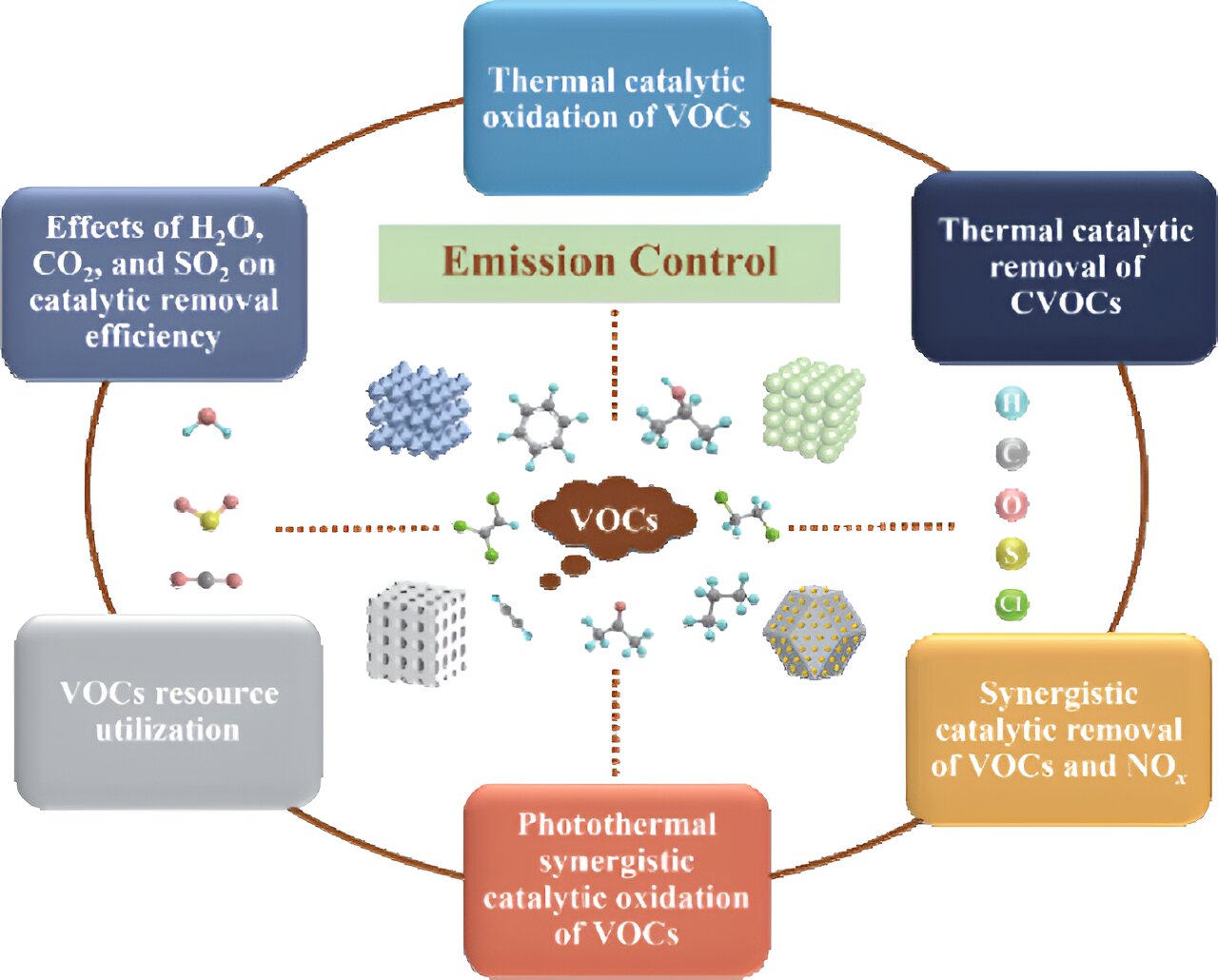
Catalytic oxidation technology can effectively remove organic pollutants without secondary pollution, and it is receiving increasing attention in VOC pollution control. A research team led by Prof. Hongxing Dai and Prof. Jiguang Deng from Beijing University of Technology, China, reports the research progress of VOC elimination via thermal catalysis or photothermal catalysis over the past 10 years, including eliminating single-component VOC or multi-component VOCs, synergetically purifying VOCs and NOx, and realizing VOC resource utilization. The catalytic degradation of VOCs is achieved by adopting single or composite metal oxide catalysts, porous metal oxide catalysts, supported noble metal nanocatalysts, and single-atom catalysts. A detailed summary of the pathways and mechanisms of VOC catalytic conversion has also been provided. Catalytic conversion of VOCs and CO2, as well as catalytic purification of VOCs and NOx, aid in the reduction of pollution and carbon emissions; thorough investigation into the mechanism of coupling external fields for the thermal catalytic destruction of VOCs; developing and synthesizing innovative catalysts to accomplish broad-spectrum control of VOC pollution, as well as a deeper knowledge of the catalytic VOCs oxidation process through the combination of theoretical calculations and in situ characterization approaches. More information: Honghong Zhang et al, Recent progress on VOC pollution control via the catalytic method, Chinese Journal of Catalysis. Citation: Examining progress on volatile organic compound pollution control via the catalytic method retrieved 24 July 2024 from https://phys. org/news/2024-07-volatile-compound-pollution-catalytic-method.